OPUS Maroc is expanding the “Floating Cities” project with three new embroidered works, created during a research residency at the Résidence Denise Masson in collaboration with Alaa Eddine Sagid, director of Le Monde des Arts de la Parure (The World of Adornment Arts), and the collectives Brodeuse Voyageuse and Iminouzerg, with support from Timendotes.
EDITORIAL
Exploring forms and symbols, preserving traditional skills, shaping the world through imagination and creativity
The true strength of Villes flottantes—a project led by Elsa Mroziewicz and Cécile Palusinski—lies in this convergence of two temporalities, two gestures, and two ways of creating that, far from conflicting, complement and enrich one another: the time of embroidery and that of digital art.
Presented in several cities within the network of the Institut français du Maroc, this traveling exhibition naturally finds its place at the heart of J-lioum, our 2026–2027 Cultural Season, which is dedicated to innovation. For here, innovation is viewed in its most fruitful sense: not as a break with the past, but as an opportunity to foster dialogue between traditional skills, regions, and technologies in order to imagine or make room for new forms and alternative narratives.
From Taiwan to India, from Tunisia to Brazil, from the United States to France, and then to Morocco, Elsa Mroziewicz and Cécile Palusinski traveled far and wide in search of initiatives, actions, and stories that address the challenges of ecological transition. From these encounters emerged Floating Cities, imaginary architectures where embroidery, augmented reality, sound design, and poetry interplay and come to life.
The Moroccan installment, Au fil de l’eau et du sacré (Along the Water and the Sacred), took shape during a research residency at the Maison Denise Masson in Marrakech. It arose from the two artists’ desire to work with Moroccan craftsmanship—particularly embroidery—and to explore the signs and symbols ubiquitous in Moroccan culture. This collaborative creation brought together curator Alaa Eddine Sagid, the Iminouzerg embroidery cooperative—with support from the Timendotes association—and the textile studio Brodeuse Voyageuse. These diverse perspectives, techniques, and forms of knowledge have provided a solid foundation for this new chapter.
In Marrakech, the exhibition reaches its climax in an exceptional setting: the Monde des Arts de la Parure and its breathtaking collection, a veritable research laboratory for artists. The signs, symbols, and motifs emerging from this research have, in turn, enriched this imaginary cartography, which is further expanded by the exchanges and connections between the cultures it explores or inspires.
At each stop on the exhibition’s tour of Morocco, a Moroccan mural engages in dialogue with a work created in India, Brazil, or elsewhere—all of which are brought together in Marrakech. Through augmented reality, audio haikus, and logbooks, these embroidered landscapes come to life and invite visitors to step into these imaginary cities. Workshops led by the artists with the public further extend this experience and place knowledge transmission and mediation at the heart of the project.
I would like to thank everyone who helped bring this Morocco Opus to life and offer the public an innovative, unprecedented experience that invites us to look at our world, our heritage, and our futures in a new light.
Flora Boillot
Deputy Director
French Institute of Morocco – Marrakech Branch
WHAT IS THE SYMBOL NAMED AFTER?
Faced with the diversity of adornments from around the world, the eye is never indifferent. Colors, contours, shapes, and materials speak to us, draw us in, and sometimes baffle us. Beneath the brilliance of this aesthetic profusion, these objects seem to naturally carry within them something that transcends them: a memory, a belief, an identity, a story, a fear, or a hope.
Adornment is thus much more than mere ornamentation. It is a way of giving form to what would otherwise remain invisible. Ever since the first seashells were worn on the body, human beings have continually selected, transformed, and reinvented fragments of the world to incorporate them into their own language. The seashell—perhaps among the first objects to be imbued with such meaning—is both material and memory: it comes from the sea, evokes its immensity, its depth, and its movement, and, once worn, becomes a sign of something entirely different.
But what becomes of a symbol as it passes through time?
It transforms, fades, shifts. Sometimes its form remains even as its meaning has disappeared; sometimes its meaning survives in a form that has become unrecognizable. A motif can lose its original meaning to take on a new significance, be reinterpreted, or be transferred from one body to another, from one culture to another, from one era to another. What was once a symbol of protection becomes an ornament; what represented an invisible power becomes a decorative motif; what was once laden with meaning becomes matter, texture, a trace.
It is precisely in this fragile space between appearance and disappearance that Cécile and Elsa’s project *Floating Cities* is situated.
Drawing on the forms and symbols found in the collections of the MAP in Marrakech—and in particular on those seashells that seem to belong to an almost primordial memory of adornment—their work proposes to shift the symbol rather than freeze it in place. The signs become floating: they detach from their context, lose some of their legibility, reassemble themselves, and appear in a new light. They are no longer merely witnesses to an ancient meaning, but fragments of a language in the making.
For a symbol is perhaps never a fixed thing. It is a relationship. It exists in the gaze that recognizes it, in the memory that transmits it, but also in the forgetting that transforms it. It can survive precisely because it is open to change.
The shells in the necklace are a beautiful metaphor for this. Shaped by the sea, cast off by living creatures, gathered by humans, and then worn on the body, they have already lived through several lives before even becoming symbolic objects. And when they cease to be understood as signs, they do not disappear for that reason: they continue to float, open to new associations, new stories, and new imaginations.
Floating Cities thus extends a broader inquiry into what we do with symbols and what they do to us.
We receive them as a legacy, but we transform them as we pass them on. We wear them to belong, to stand out, to protect ourselves, to remember, or simply to be seen. Then, in turn, we leave them to the passage of time, which erases them, distorts them, and sometimes gives them new life.
Birds, intertwined plant motifs, protective hands, predators and prey, sacred waters, mountains, celestial bodies, seashells: the entire world seems to be reducible to a few forms and wearable on the body. Nature becomes language, and language becomes matter.
In Floating Cities, this material is set free once more. The symbols leave the body—and sometimes even shed their meaning—to enter a space where they can float, encounter one another, and undergo metamorphosis. They become fragments of imaginary cities, architectures of memory, traces with no certain origin.
Perhaps this, ultimately, is where the power of the symbol lies: not in its ability to preserve a meaning intact, but in its capacity to survive its own disappearance.
A symbol can fade without disappearing. It can lose its name and retain its form; lose its form and retain a sensation; lose its meaning and continue to produce meaning.
So, like these seashells that came from the sea and were once worn on bodies whose names we will never know, these signs continue to travel. They float between eras, between cultures, between memory and oblivion.
And perhaps, as we watch them float once more, we are not only seeking to rediscover what they once meant, but to discover what they can still tell us today.
Alaa Eddine Sagid, curator of Monde des Arts de la Parure (The World of the Arts of Adornment)
MOROCCO OPUS #1
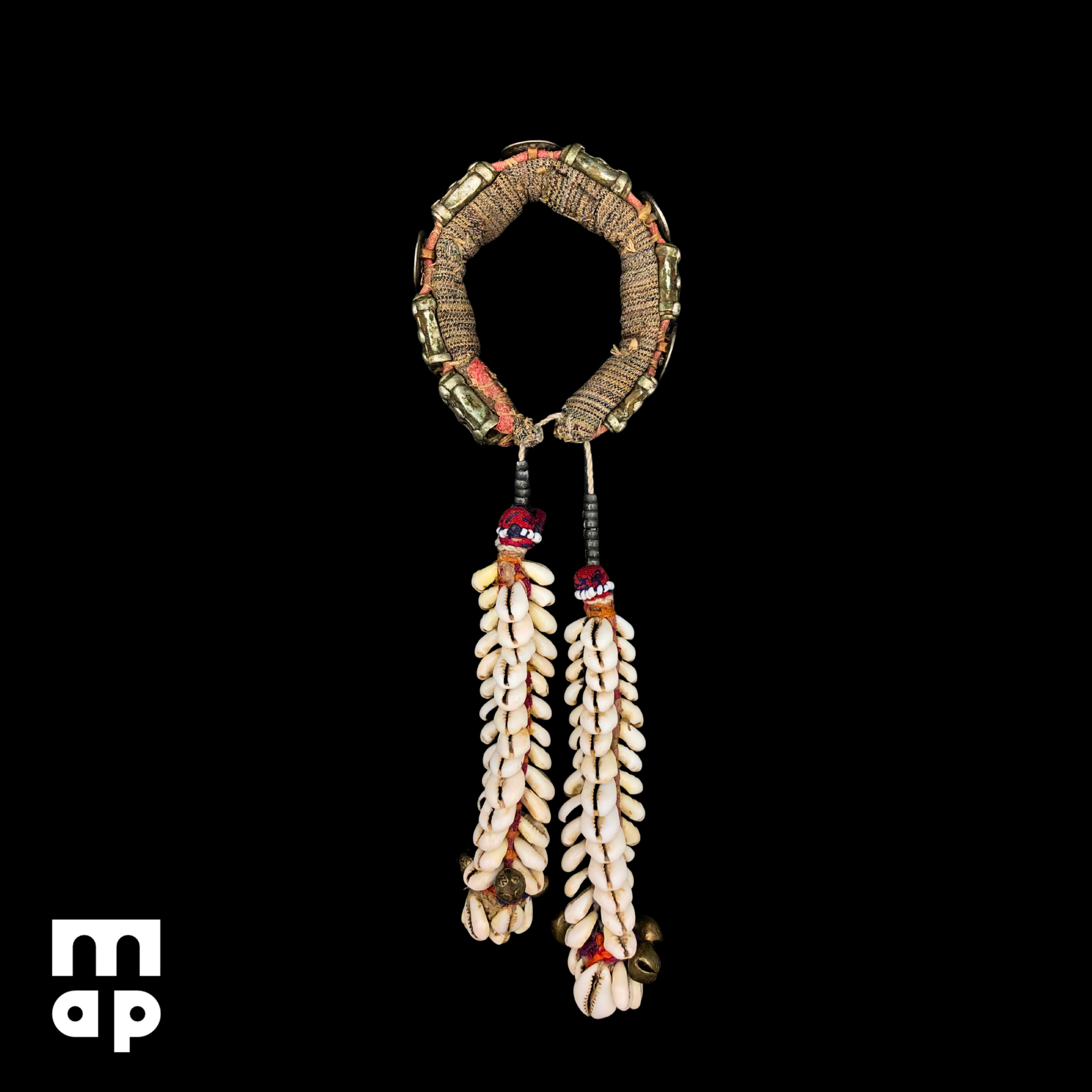
Long before it became currency, jewelry, or an amulet, the seashell was one of the earliest vehicles for human symbolic thought. The perforated seashells discovered in Morocco—notably at Bizmoune and Taforalt—bear witness to this ancient transformation of a natural element into a symbol, worn on the body to express identity, belonging, or protection.
Originating in the ocean and traveling far beyond the shores, the seashell also carries the memory of movement, exchange, and migration. The cowrie shell is a particularly powerful expression of this, associated with the feminine, fertility, and protection.
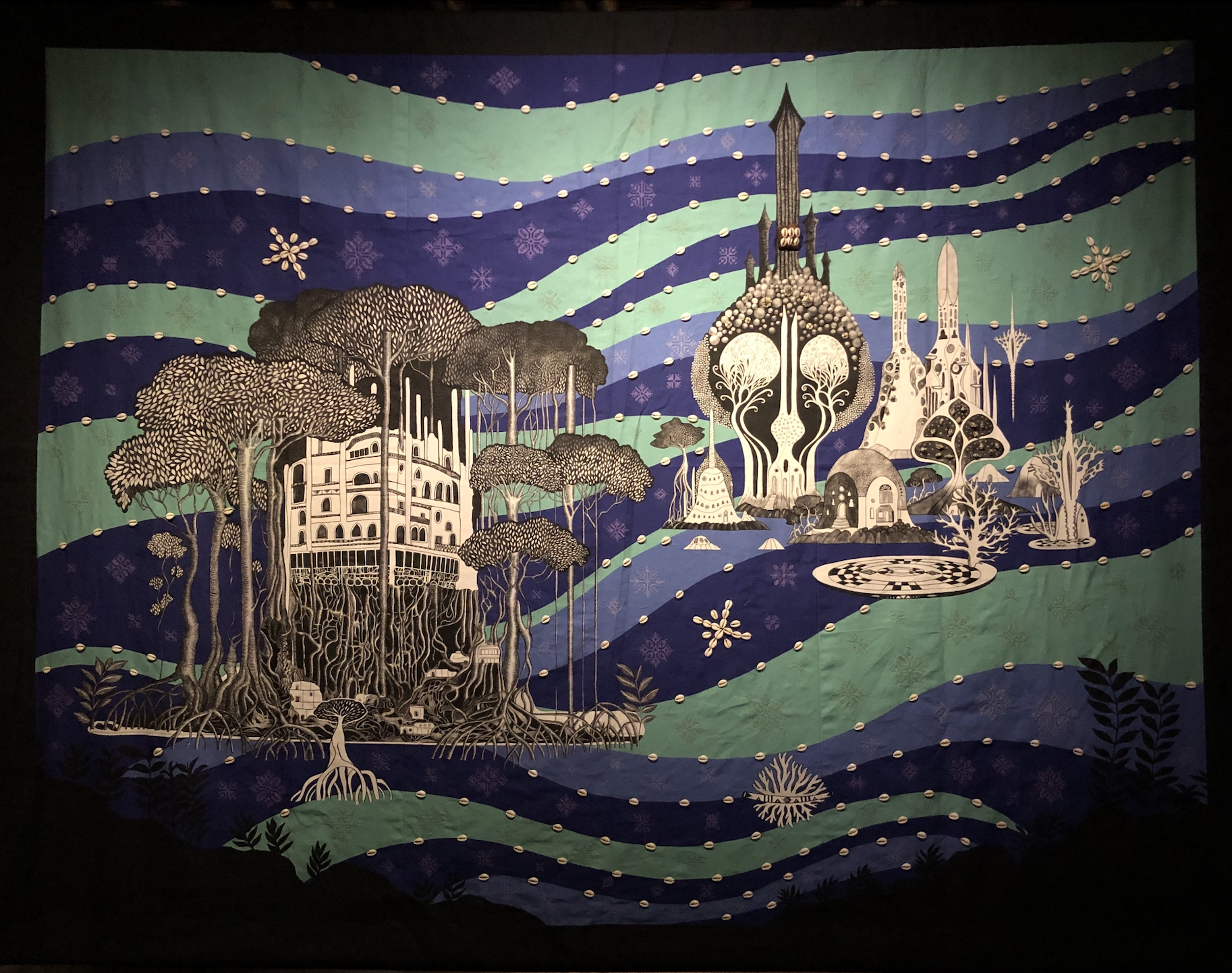
This work, MOROCCO OPUS #1, revives this memory by directly incorporating seashells into the embroidery. Having become both the material of the work and symbols, they connect the ocean, the body, memory, and the flow of cultures—like so many marine fragments come together to tell a shared story.
(1) MOROCCO OPUS #1 Digital drawing printed on cotton, embroidery, augmented reality, and sound poetry. This work was created during a residency at the Maison Denise Masson in Marrakech and through a partnership with the MAP in Marrakech, Morocco, 2026. Hand-embroidery created in collaboration with the Iminouzerg collective and with support from Timendotes, Morocco, 2026.
(2) Cotton upper-arm bracelet, silver amulets, and two dangling spikes covered with cowrie-shells and lead beads, Rajasthan, India, MAP Collection (Monde des arts de la Parure, Marrakech)
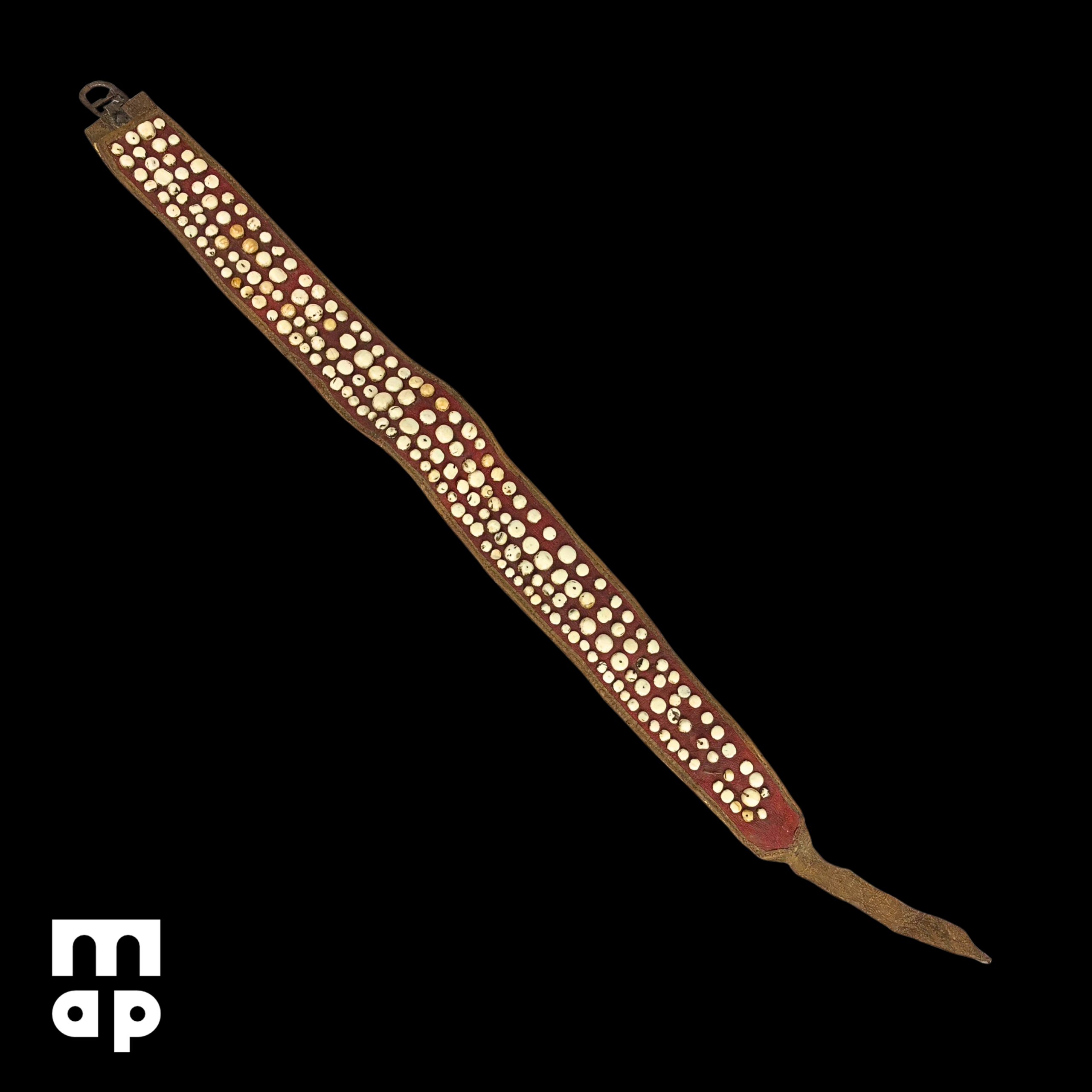
(3) Men’s leather belt with buttons carved from conus shells, Tibetan Plateau
MOROCCO OPUS #2
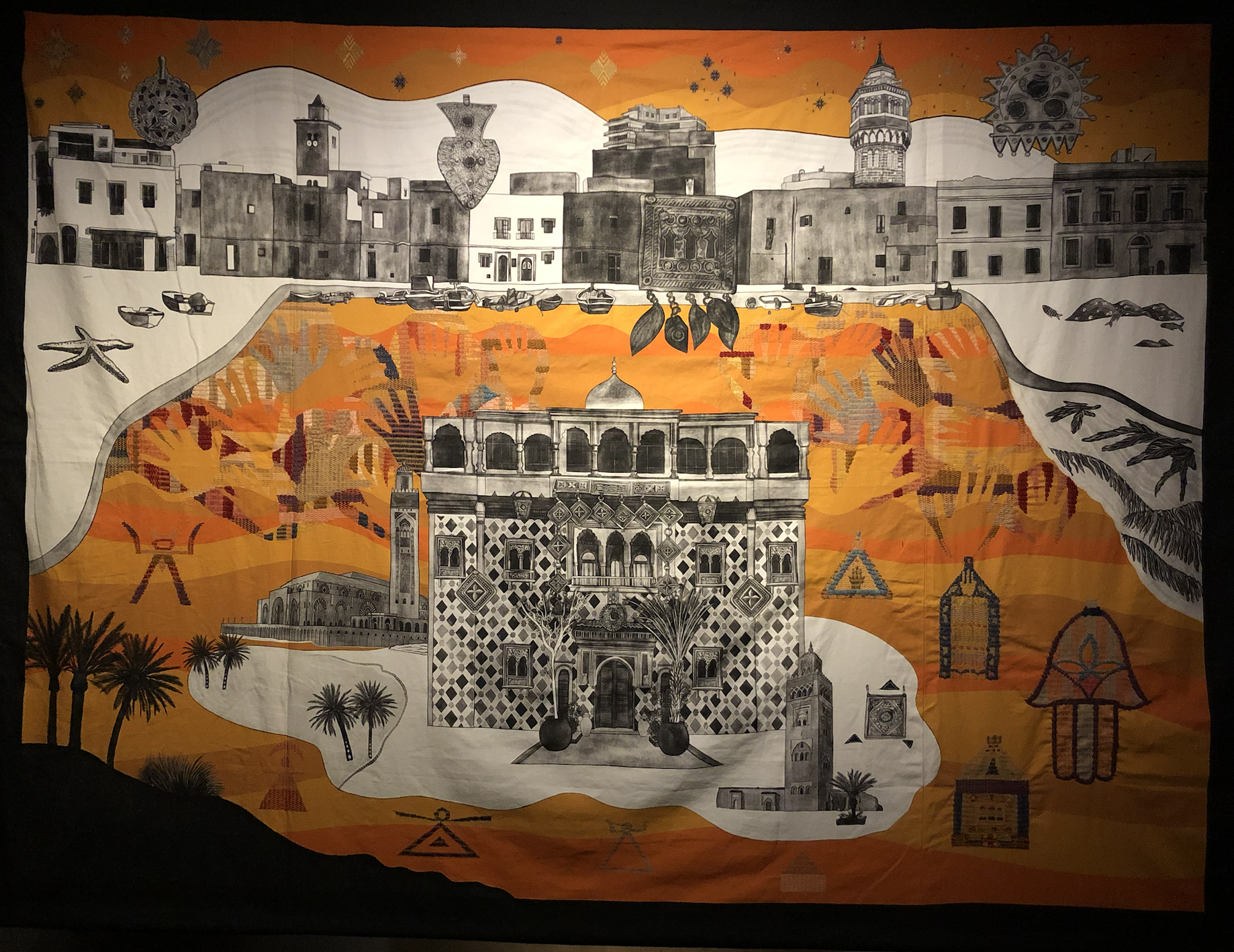
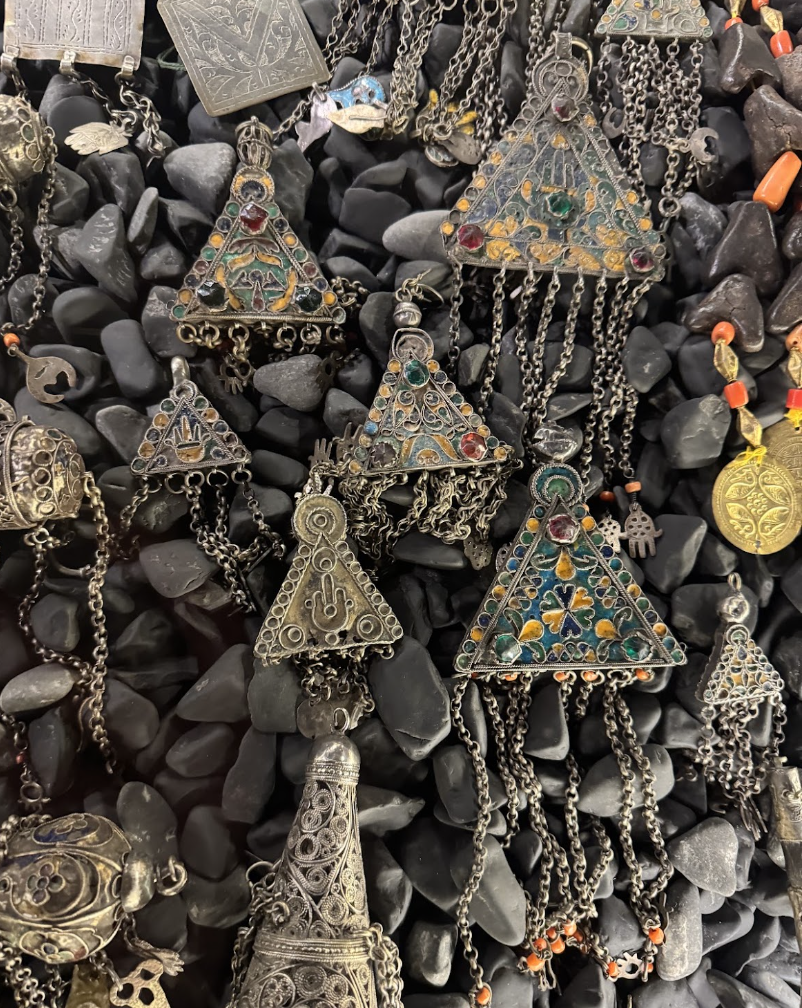
In Floating Cities, the ocean is conceived as a space of movement, transformation, and memory. In this work, the blue of the ocean gives way to the ochre tones of the desert, another landscape of journeys. Tanit’s hand and symbol extend this reflection: from the prehistoric imprints etched into the ochre walls of caves to the protective symbols of the Mediterranean, their forms traverse time, cultures, and territories, constantly reinventing themselves. The hand evokes gesture, transmission, and protection; Tanit, associated in particular with fertility, belongs to a Mediterranean world shaped by exchanges between its shores.
Like ocean currents, they circulate, shift, transform, and connect the shores. The ocean thus becomes a metaphor for this memory in motion, capable of fostering a dialogue between imaginations separated by time and space.
 .
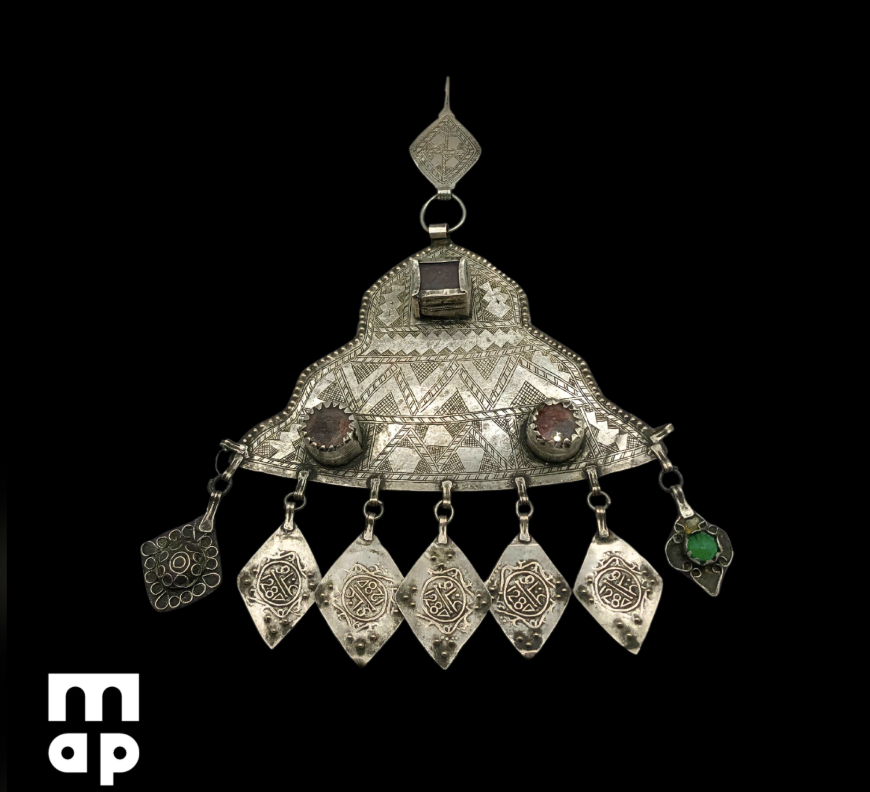
(1) MOROCCO OPUS #2 Digital drawing printed on cotton, embroidery, augmented reality, and sound poetry. This work was created during a residency at the Maison Denise Masson in Marrakech and through a partnership with the MAP in Marrakech, Morocco, 2026. Hand-embroidery created in collaboration with Brodeuse Voyageuse.
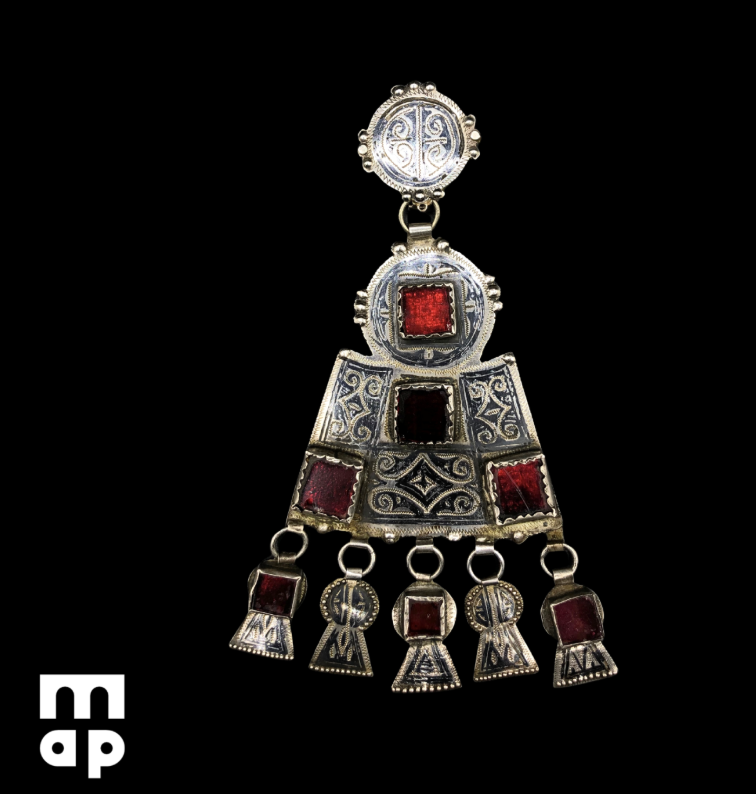
(2) Gold temporal pendant, with a nielloed silver head decorated with cabochons and a red glass square. An anthropomorphic yet stylized representation blending ancient mother goddess figures with an abstract triangle. Five secondary pendants featuring the same stylized anthropomorphic form.
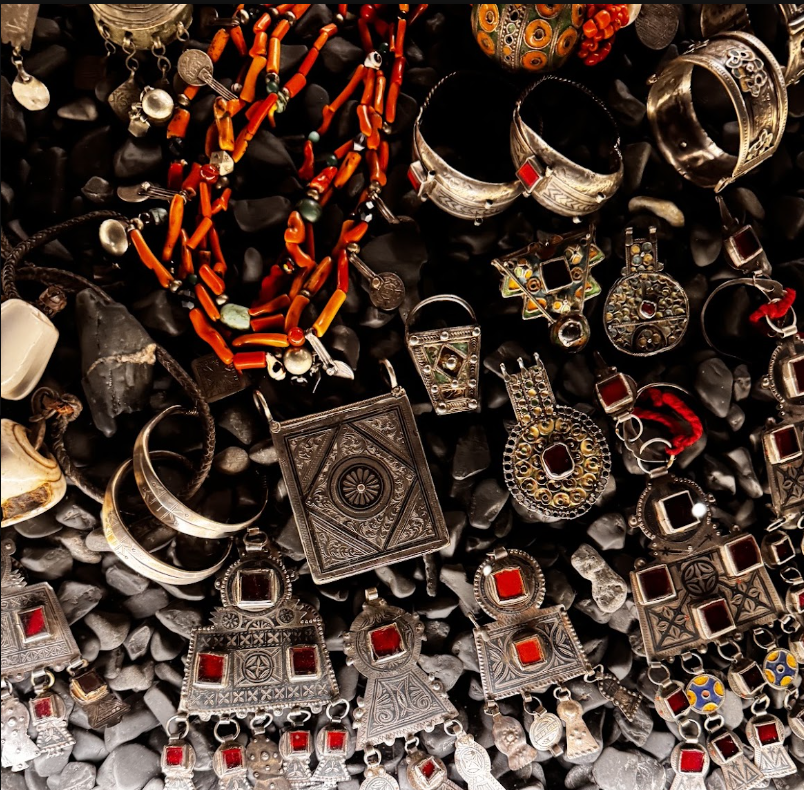
(3) A typical example of the symbolic erosion of a reliquary or a sealed but empty amulet. The function of an amulet is taken over by the container, which has a more orthodox square shape (influenced by late Islamic amulets). It is, however, decorated with auspicious symbols engraved or executed in niello: one can distinguish engraved plant motifs and a highly geometric niello decoration, structured around a center evoking promises of fertility.
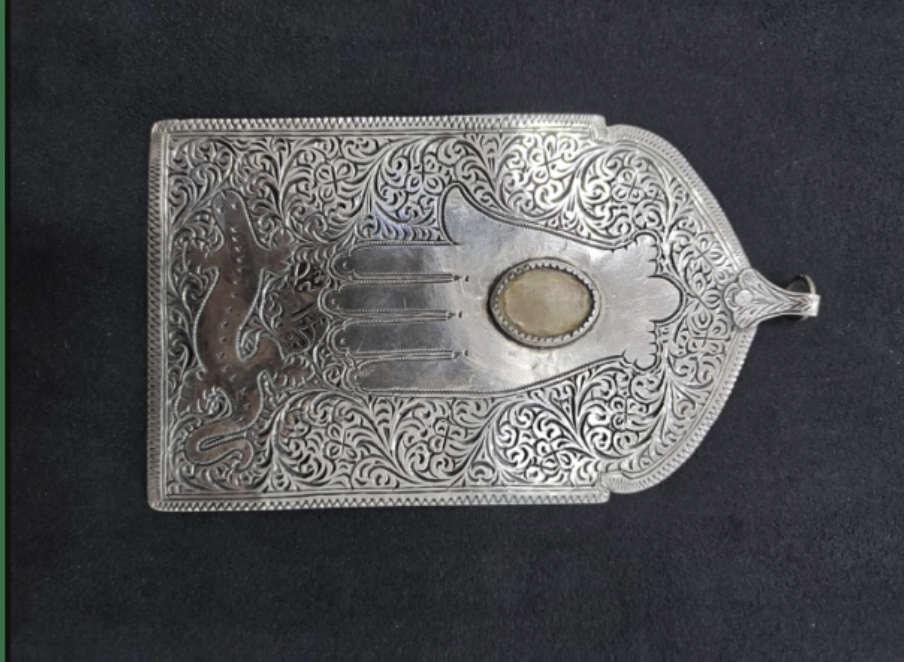
(4) Silver pendant in the shape of a votive plaque, engraved with a hand and a salamander against a background of foliage. Morocco.
(5) Gilded and enameled silver amulet pendants, modeled after ancient Phoenician votive stelae as well as medieval European reliquary shrines. The decorative repertoire is varied, ranging from the figurative to the abstract and incorporating texts from the Quran, architectural elements, and zoomorphic symbols. Tunisia
(6) A symbol associated with fertility, both because of its triangular shape—representing a fertile woman (with its smaller pendants symbolizing her offspring)—and because of its position on the forehead, where the fringe of hair is located, which is itself associated with female fertility throughout North Africa. Western High Atlas, Morocco. Note the highly symbolic number of seven pendants, as well as the presence among them of replicas of ancient coins, which symbolically link the concepts of fertility and wealth.
MOROCCO OPUS #3
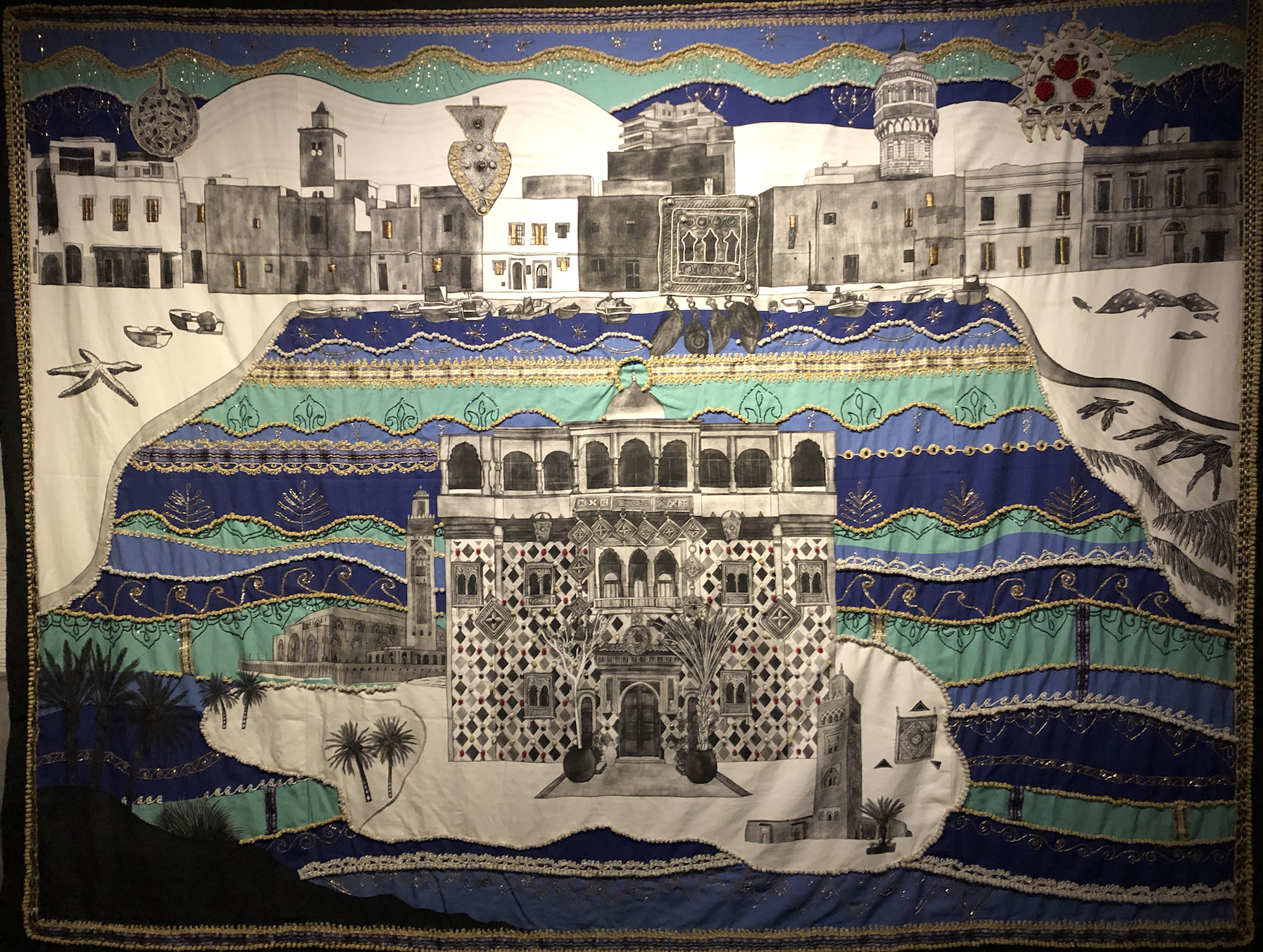
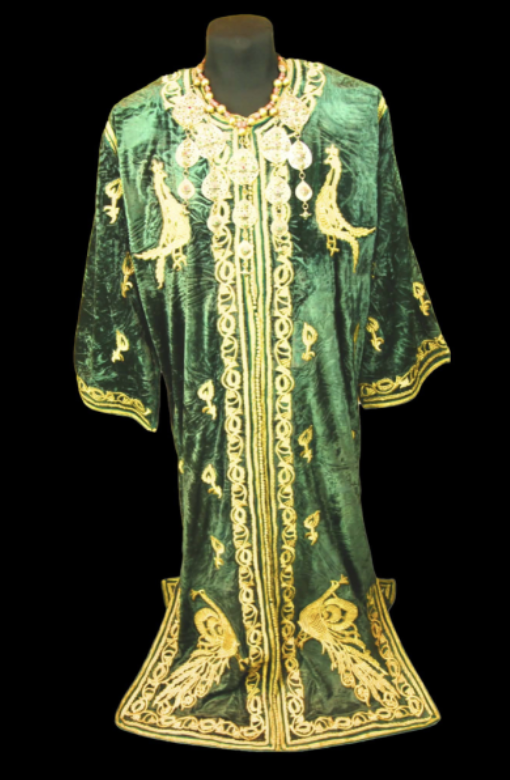
This work, MOROCCO OPUS #3, holds a unique place in Floating Cities: it seeks to bring forth a contemporary symbol of “being and doing together,” born from the encounter between women from both shores—France and Morocco. Artists and embroiderers blend their craftsmanship and imaginations in a work inspired in particular by the ornamental world of the Moroccan caftan. Embroidery thus becomes a shared language. From one shore to the other, threads, gestures, and stories come together to symbolically weave a shared territory, transforming the Mediterranean from a border into a space of connection and collective creation.
 .
 .
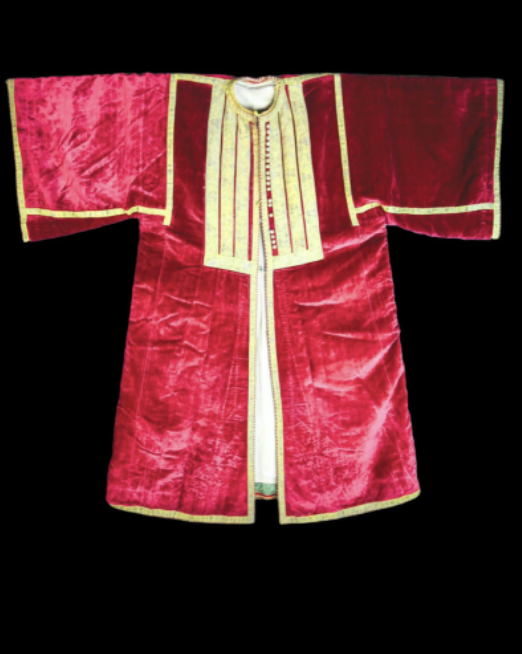
(1) MOROCCO OPUS #3 Digital drawing printed on cotton, embroidery, augmented reality, and sound poetry. This work was created during a residency at the Maison Denise Masson in Marrakech and through a partnership with the MAP in Marrakech, Morocco, 2026. Hand-embroidery created in collaboration with the Iminouzerg collective, with support from Timendotes
(2) Ceremonial caftan in green velvet, adorned with gold-thread embroidery depicting floral motifs and birds. Often worn during henna ceremonies and wedding celebrations because of its green color, which is considered auspicious and associated with popular beliefs related to Islam.
(3) Red velvet caftan, adorned with imported gold braid. Its cut, featuring wide sleeves, allowed nursing women to slip their babies through to feed them without having to undress. Rabat, Morocco.
OUR PARTNERS IN MOROCCO
Monde des Arts de la Parure (MAP), Marrakech
The MAP Marrakech showcases nearly 3,000 pieces of adornments, ornaments, jewelry, clothing, textiles, and other ethnographic objects to the public. This collection was selected from among the 7,000 pieces gathered by Marlène and Paolo Ponce-Gallone over several decades of passionate travel and research.
Alaa Eddine Sagid, curator of Le Monde des Arts de la Parure (MAP)
Alaa Eddine Sagid is an independent researcher, collector, traveler, curator, and director of collections at MAP Marrakech (Le Monde des Arts de la Parure). With over 25 years of experience, he specializes in the study of traditional jewelry, adornment, and material cultures. His self-taught career has developed through his travels, encounters, and research, in close contact with objects, private and museum collections, and the art market. His work combines historical and ethnographic research, technical analysis of objects, collection development, exhibition curation, and exhibition design. He views adornment as a universal language that reveals identities, beliefs, and exchanges between societies. His research explores the circulation of objects, the transmission of craftsmanship, and the construction of heritage narratives. At the intersection of anthropology, art history, and material culture, he favors an independent and transdisciplinary approach. He develops collaborations with researchers, museums, collectors, and artists, fostering dialogue between heritage, contemporary creation, and the diversity of cultural expressions.
Iminouzerg Collective and Traveling Embroiderer
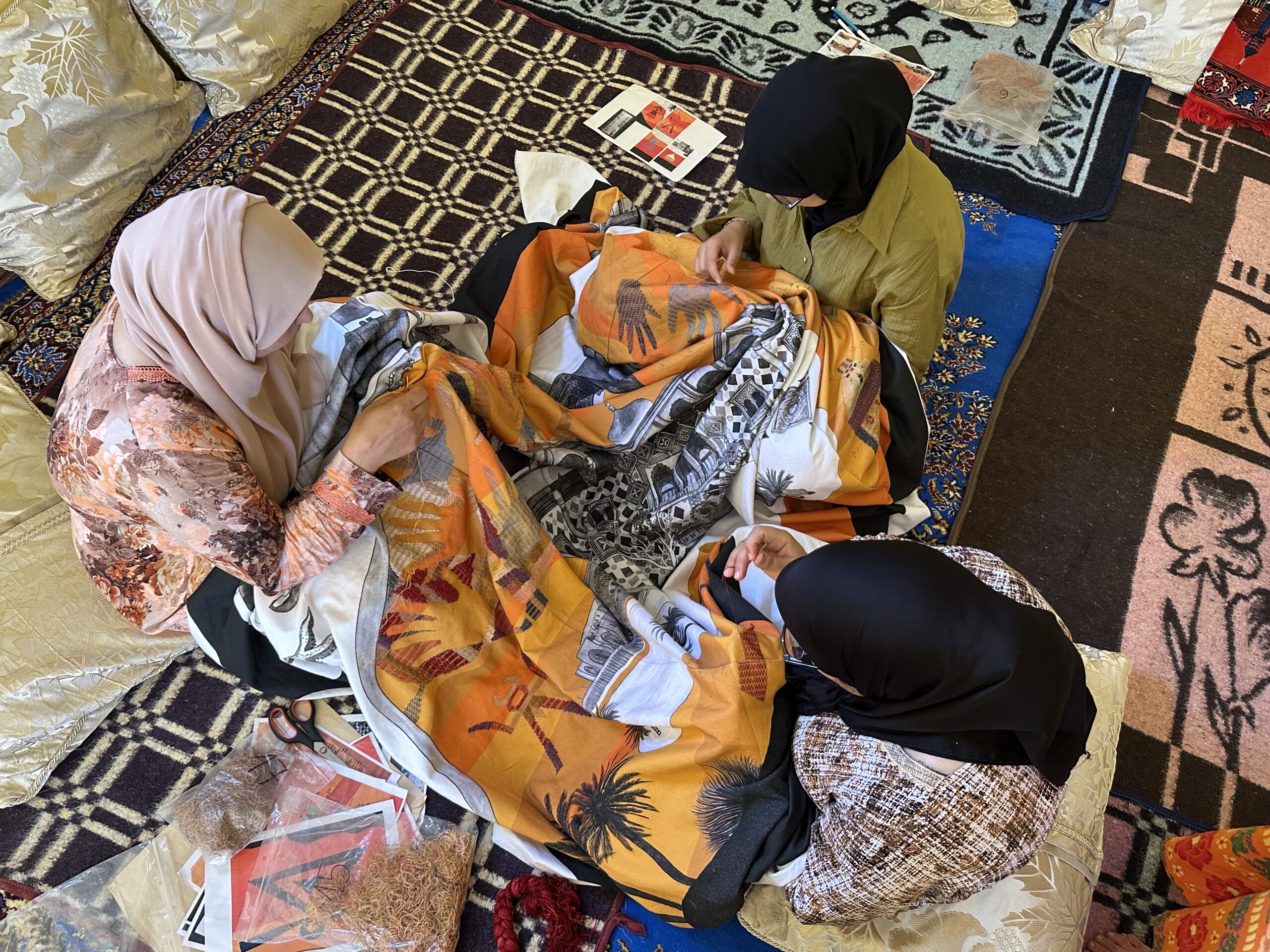
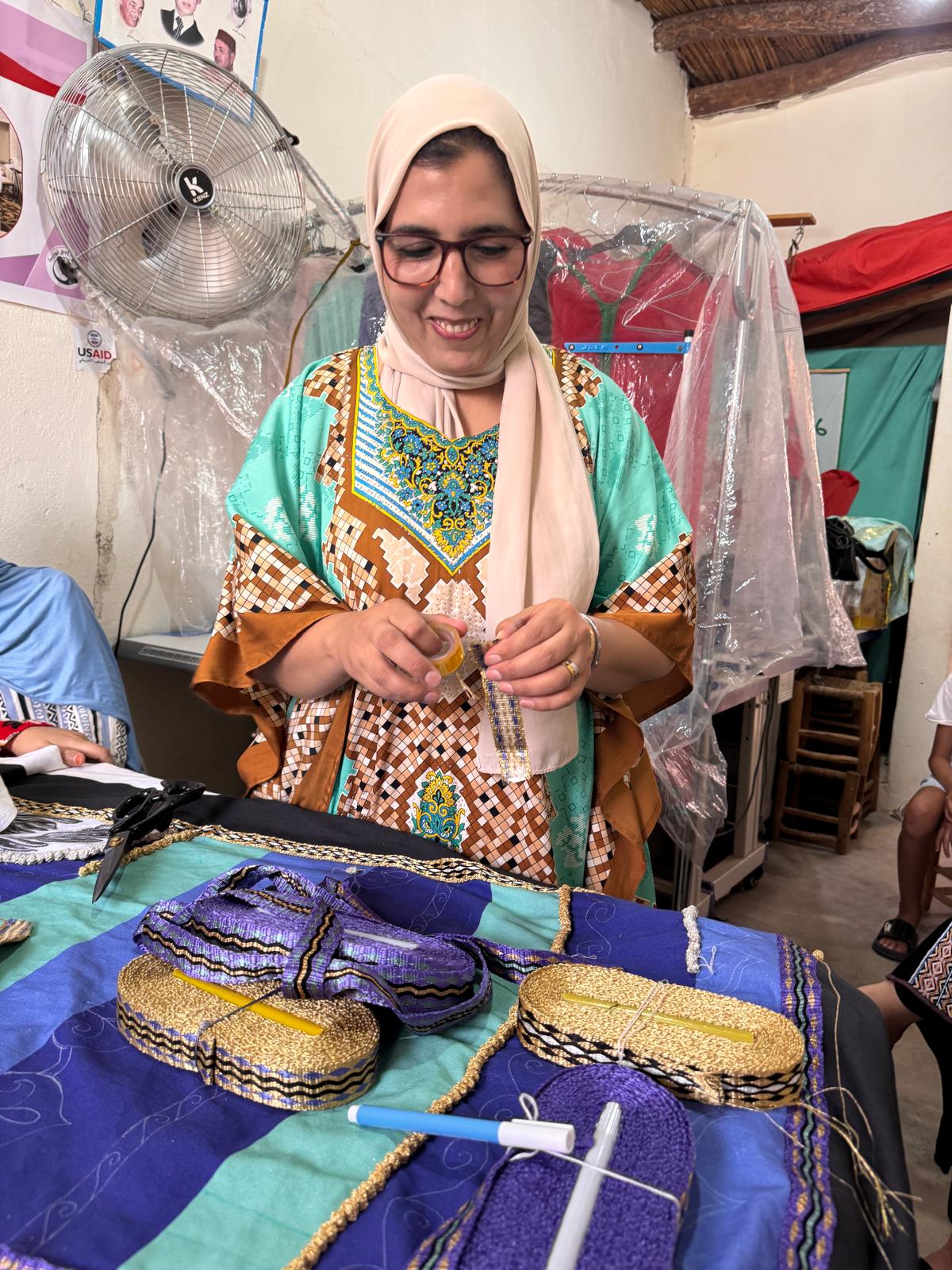
In Morocco, Opus Maroc has been built through two distinct collaborations. The embroiderers of the Iminouzerg cooperative, with the support of Timendotes, approach their work as part of an initiative that combines the transmission of traditional skills, the promotion of traditional techniques, and the economic empowerment of women. Through embroidery, the goal is to both preserve and evolve a textile heritage, foster its integration with contemporary design, and contribute to the recognition of the embroiderers’ work as well as the creation of sustainable sources of income. At the same time, Brodeuse Voyageuse brings its unique approach to embroidery as a medium for creativity and dialogue between cultures.
These collaborations are not viewed as a mere stage in the manufacturing process. Each piece of embroidery bears the mark of an encounter, a region, a craft, and a technique passed down through generations. They also explore how contemporary creation can help keep artisanal practices alive while supporting those who carry them on. In contrast to the immediacy of digital technologies, the slow pace of thread thus situates *Floating Cities* within a different temporality: that of gesture, memory, and transmission.
 .
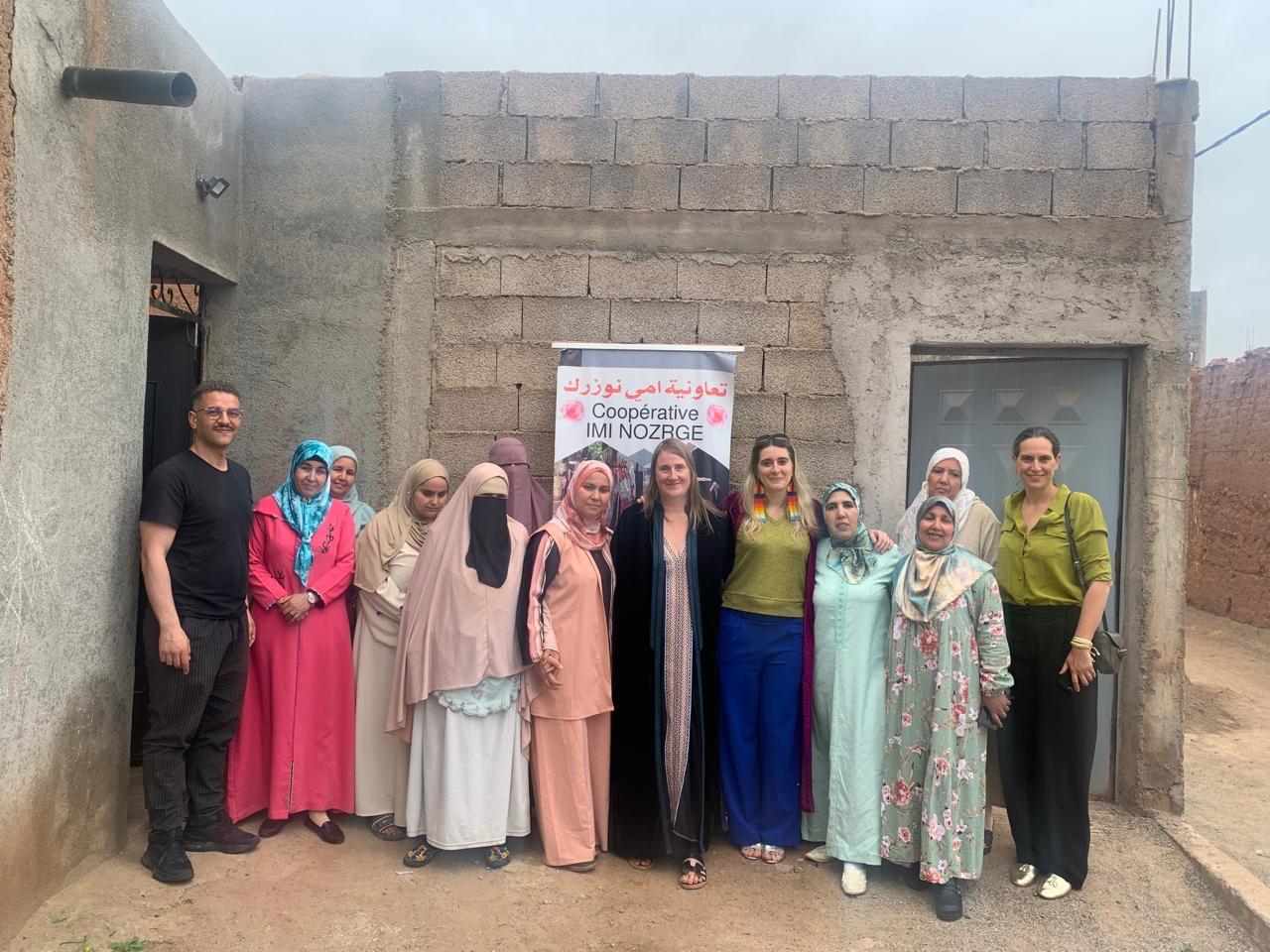
This project was carried out as part of the Denise Masson Residency, with support from the Institut français in Marrakech and the Institut français in Morocco.